
You've invested in a learning management system. You've developed courses. Your members enroll, but then something frustrating happens: they don't finish. Only 12-15% of online learning design courses see completion, and your member engagement numbers reflect it.
The problem isn't your content. It's how that content is designed and delivered. When you understand what makes association eLearning different and apply proven course design best practices, you transform educational content into a powerful driver of member engagement and non-dues revenue.
Why Course Design Matters More Than Your LMS
Your learning management system provides the infrastructure, but course design best practices determine whether members actually engage. Think of it this way: the LMS is the highway, but course design is the vehicle that keeps members moving toward their destination.
What Makes Association eLearning Different From Corporate Training?
Unlike corporate employees completing mandated training, your association members balance professional obligations and competing priorities while investing their own time and money. Your courses must deliver immediate, recognizable value.
This fundamental difference shapes every design decision. Corporate training relies on completion requirements and workplace accountability. Members need to see how each module advances their careers or solves real problems they face, so courses need to earn their attention through accessibility and perceived professional benefit.
How Does Poor Course Design Impact Member Retention and Revenue?
When members enroll in courses but don't complete them, the consequences extend beyond individual dissatisfaction. Members who experience frustrating learning experiences are less likely to renew memberships or purchase additional educational offerings. 36% of associations rely on continuing education as a major source of non-dues revenue, making course completion rates directly tied to financial sustainability.
Poor design also creates inefficiency. Your team spends valuable time creating content that doesn't get consumed, responding to confused learners, and rebuilding courses that could have been designed effectively from the start.
What Are the Core Elements of High-Impact Course Design?
Effective online learning design starts with structure. The most engaging courses share specific architectural elements that guide learners from introduction to mastery while maintaining motivation throughout. Read our full blog about "What Are the Advantages and Disadvantages of Online Learning?" here.
How Do You Structure Content for Maximum Engagement?
Begin each course with clear learning objectives that answer the member's immediate question: "What will I be able to do after completing this?" Then organize content into logical progression units that build skills incrementally.
Use the 3-part module structure: introduction (why this matters), instruction (how it works), and application (putting it into practice). This pattern mirrors how professional development courses are consumed in the real world. Members need context before information, and they need opportunities to apply concepts immediately while they're still fresh.
Remember to front-load the most valuable insights. If a member only completes the first module, they should still be able to gain actionable knowledge they can implement immediately.
What Role Does Microlearning Play in Course Completion?
Microlearning isn't just a trend; it's a response to how busy professionals consume education. Microlearning courses achieve an 80% completion rate compared to just 20% for traditional long-form courses. Breaking complex topics into focused, digestible segments respects your members' time constraints while improving retention.
Design modules that can be completed in 5-10 minutes, with each segment addressing one specific skill or concept. This approach allows members to learn during brief windows between meetings or whenever they find pockets of time. Completing short modules creates momentum and a sense of progress that longer courses often lack.
How Can You Bridge Event Content With Ongoing Education?
Your association produces valuable content at every event. Building connections between your events and continuing education offerings creates year-round learning while maximizing content investment.
Why Should You Repurpose Event Recordings Into Courses?
Event sessions represent your organization's best subject matter experts delivering current, relevant content to engaged audiences. Recording these sessions and uploading them to your association LMS transforms one-time value into ongoing revenue streams. Members who couldn't attend gain access to the expertise they missed, while attendees can revisit complex topics.
The economics make sense. You've already invested in speaker preparation, venue costs, and marketing. Repurposing event content extends the return on that investment without proportional additional costs. Each recorded session becomes an educational asset that generates value long after the event concludes.
How Do You Turn One-Time Event Value Into Year-Round Learning?
Structure event recordings as part of broader learning paths rather than standalone sessions. Combine related presentations into themed courses that guide members through comprehensive topics. Add brief introductions that provide context and include assessments that verify understanding.
Consider offering event recordings as part of member benefits during the first 30 days, then transitioning them to premium non-dues revenue offerings. This rewards active members while creating additional revenue from those seeking specific expertise.
What Design Strategies Drive Course Completion?
Understanding what keeps learner engagement high helps you design courses that members actually finish. The difference between 15% and 80% course completion rates comes down to specific, implementable design strategies.
How Do Interactive Elements Improve Learning Outcomes?
Passive watching produces minimal retention. Interactive elements transform observers into participants. Embed opportunities for members to apply concepts within the learning experience itself through scenario-based decision points, reflection prompts, or practical exercises they complete in their own work context.
Discussion forums and social learning features increase accountability and create communities around course content. When members see peers engaging with material and sharing applications, they're more likely to complete courses themselves.
When Should You Use Assessments and Quizzes?
Use formative assessments throughout courses to reinforce learning, not just at the end to verify completion. Brief knowledge checks after each module help members identify concepts they need to review while the information is still fresh.
Design assessments that mirror real-world applications rather than testing memorization. Scenario-based questions that ask members to apply concepts in realistic situations provide better learning outcomes and feel more relevant to busy professionals.
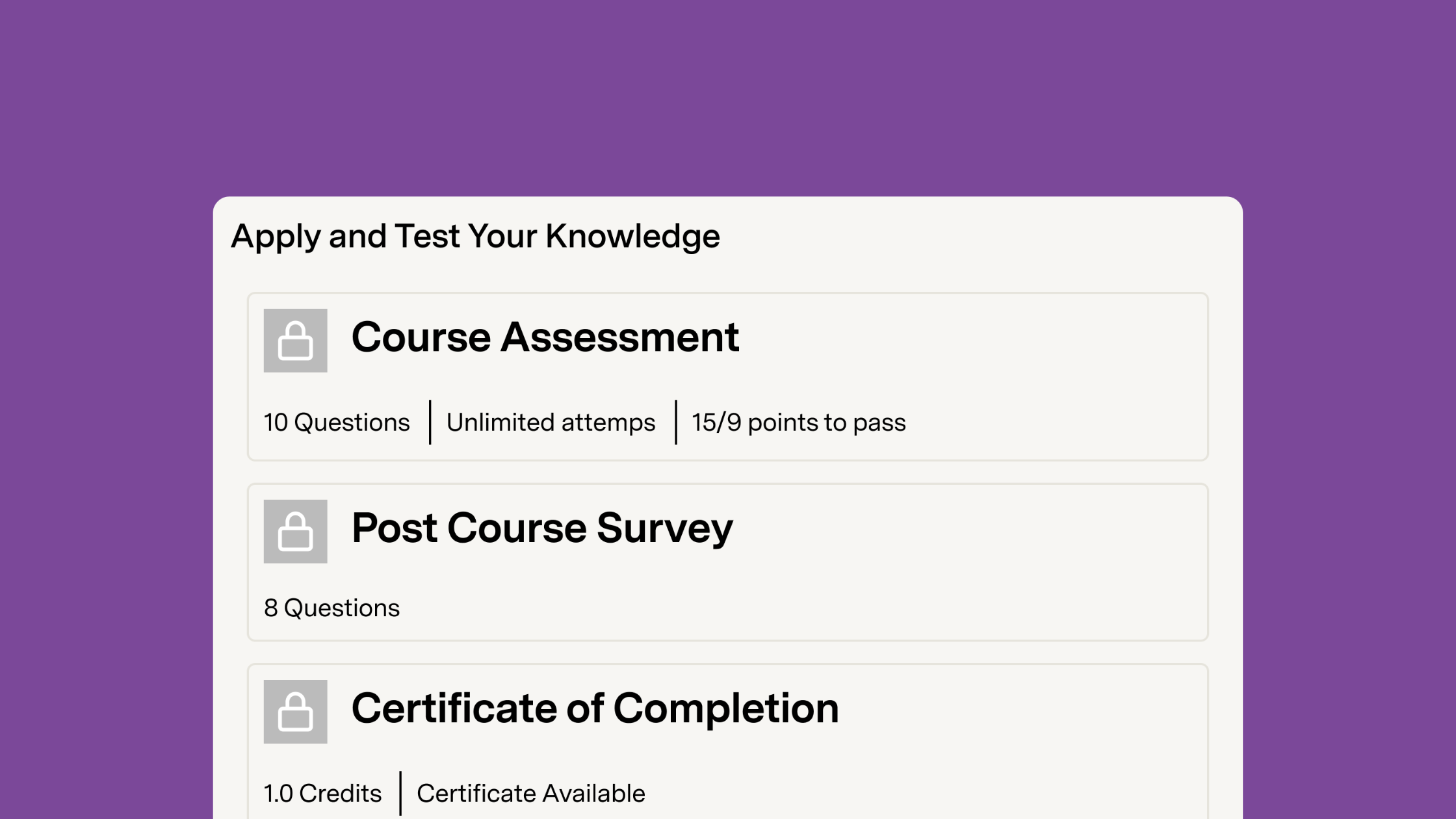
For courses offering continuing education credits, clearly communicate assessment requirements upfront. Members need to know what's expected for credit completion, including passing scores and retake policies.
How Do You Balance Educational Quality With Revenue Goals?
Creating courses that serve members while generating non-dues revenue isn't contradictory; it's about aligning value with pricing and designing pathways that encourage increased engagement.
What Monetization Strategies Work Best for Association Courses?
Tiered pricing respects different member segments while maximizing revenue potential. Offer core courses as member benefits to drive engagement and retention, while premium specialized courses generate additional revenue.
Bundle courses into certificate programs that command higher prices while delivering comprehensive skills development. Members perceive greater value in structured programs that lead to recognized credentials, and completion rates improve when courses are part of a defined pathway.
Consider subscription models that provide unlimited access to your course library for a monthly or annual fee. This creates predictable recurring revenue while removing barriers to member exploration of new topics.
How Can You Use Learning Paths To Increase Member Value?
Learning paths guide members from foundational knowledge through advanced mastery, creating progression that encourages ongoing engagement. Design paths around member career stages or specialization areas.
Pathways also create cross-selling opportunities. When members complete an introductory course, immediate recommendations for related advanced courses maintain momentum while increasing revenue per member. This works because members who've already invested time in a topic are naturally inclined to continue developing that expertise.
Track pathway completion and recognize member achievement. Digital badges, certificates, and public recognition motivate completion while creating visible proof of professional development that members can share with employers and colleagues.
Turning Learning Into Lasting Member Value
Ready to design high-impact courses that keep members engaged year-round? Discover how Elevate, Cadmium's learning management system for associations, helps you create, repurpose, and monetize educational content.
Transform your event recordings into ongoing learning opportunities, design courses that members actually complete, and build sustainable non-dues revenue streams that support your mission. Book a demo today!


